Showing posts with label textiles. Show all posts

2/05/2012

I went to Google & ended up at the Met...

18


I'd seen this bead posted somewhere, thought I'd find out a little more about it...
it was the date that fascinated me,
created somewhere around 500-600 A.D.
So, what else does one do?  I Googled it...

Culture: Frankish ~  Medium: Glass ~ Dimensions: 1  9/16 x 3/4 in.

and there it was, at the Metropolitan Museum of Art, in New York City.
Now, it's been a long time since I visited there in person and I don't know if  I've ever been to their website,
so what the heck, I   made the big mistake   decided to have a little wander around
and proceeded to type the word BEADED into the search box...

oh heaven help me.

Wait till you see some of the incredible beaded objects I discovered.

  But before I continue on, I want you to know that it's perfectly alright with the Met to share their images like this.  In light of recent copyright discussions here (ahem), and elsewhere amongst friends, 
I made a special point to check this on the Met's 'Terms and Conditions' page.
Clickable links are provided with every image so you can go directly to the Met's collection (and their images enlarge to full screen size - plus a zoom thingey - wow).

We're good to go, and that's really good 
because now I'm gonna show you a few of their amazing pieces of bead antiquity...


Date: ca. 680-670 B.C. ~ Geography: Egypt, Upper Egypt; Thebes ~ Medium: Blue faience beads

Constructed of tubular faience beads strung together in a net pattern, this shroud was sewn onto the outer wrappings of Tabakenkhonsu's mummy.  Additional beads in various colors have been worked into the garment at several points: a beaded broad collar has been added to the top, where the garment came over the mummy's neck;  over her breast was a winged scarab to protect the heart; and on the abdomen are four "canopic" genii who guarded the viscera.

A very interesting description of "faience" - the oldest artificial substance,
made a millennium before glass was invented -
can be found over here...


Date: mid-19th century ~ Geography: Canada, Quebec ~ Culture: Huron ~ Medium: Silk, wool, glass, moosehair ~ Dimensions: H. 2 1/2 x W. 9 in.


Date: ca. 2030-1802 B.C. ~ Geography: Egypt, Upper Egypt; Thebes ~ Medium: Wood, mud, linen string, paint

The so-called paddle doll consists of a flat piece of wood depicting the torso, rudimentary arms and neck of a woman, with a thick shock of "hair" made of beads strung on linen thread.  The body is often painted with jewelry, textile patterns and/or tattoos.  Contrary to their modern name, these "dolls" were not toys... It has been suggested that paddle dolls were an accoutrement of troops of singers and dancers who performed at religious ceremonies associated with the goddess of Hathor.

2,000 years B.C....how can this still exist???
I am in awe.


Date: mid-20th century ~ Culture: African (Dinka peoples) ~ Medium: glass beads, animal skins, wood, cowrie shells

The waist as a zone of decorative focus is not exclusive to women.  The Dinka people of the Sudan are virtually naked, save for their jewelry - necklaces, armlets, bracelets, anklets, and belts - and their beaded vests and corsets.  As each of these items is an explicit indication of age and status, their corsets are of varying scale.  The most heroic, as in this example, extend from the small of the back to a point above the shoulders.


Date: 20th century ~ Culture: African (Dinka peoples) ~ Medium: fiber, glass beads, cowrie shell


Date: 1818-1830 ~ Culture: Mexican ~ Medium: glass, silk ~ Dimensions: 4 3/8 x 1 1/2 in.

Beside the intricate beauty of the hand work, there is an interesting story behind this piece...
as there so often is.  Here is part:

The unusual shape of this early miniature reticule suggests that it served a decorative, rather than functional purpose.  Probably hand knitted, it is part of the Mexican beadwork collection of over 600 pieces assembled by Elizabeth Morrow (1873-1955), mother of writer Anne Morrow Lindbergh, the wife of renowned aviator Charles Lindbergh.  Morrow collected the objects between 1927 and 1930, when her husband, Dwight Morrow, Sr., served as U.S. ambassador to Mexico...

Date: 19th-20th century ~ Geography: Nigeria ~ Culture: Yoruba peoples ~ Medium: wood, glass beads, cloth, leather, fur, metal, pigment 


Date: 12th-14th century ~ Geography: Peru ~ Culture: Chimu ~ Medium: Spondylus shell and black stone beads, cotton ~ Dimensions: H. 17 1/2 x W. 15 in.


Date: 19th century ~ Culture: English ~ Medium: bone, metal and beads

There were no dimensions for this one on the Met's website...I wonder about its size.
And would this be a fancy bobbin for lacemaking?
It is divine, whatever the intended use.

: : :

Just a couple more to show you - I feel like a glutton too long at the bead table!
But these next two exquisite textile pieces you must see...

a 1920's bead embroidered silk velvet dress...

Designer: Jean Patou ~ Date: ca. 1924 ~ Culture: France ~ Medium: silk, metallic thread, metal beads


...and this sample embroidery cloth of the same era, attributed to Sarah Lipska, a Polish designer.

Date: 1920-29 ~ Culture: French ~ Medium: silk, metal ~ Dimensions: 34 1/2 in.

This object is from a collection of sample embroideries, which was originally owned by Morris de Camp Crawford, editor of Women's Wear Daily, who collected objects which told the story of fashion and fabric history...Lipska is an enigmatic figure, who is known to have worked with Leon Bakst as a set and costume designer for the Ballets Russes, and later in the 1920s as a fashion designer in Paris at 4 rue Belloni, and finally as a sculptor.  Extant examples of her work are rare...

Please treat yourself & view this over at the Met, 
click to enlarge - then zoom in to see her beautiful beaded stitches...

whatever you do, stay away from the search box.
You have been warned.


9/22/2011

Transparency in many forms

23


I have been coming to some personal conclusions about transparency.  I started by asking, 
what else defines transparency besides the ability
to see through something?


Can transparency add another dimension to a point of view
like the turning of perception
upside down?


Since my last post about watercolor, I've been thinking a lot about this subject
so I went to various dictionaries looking for definitions of the word "transparent"
and after diving into the collection of images over on Tumblr,
finally, some thoughts are coming together...

Note:  click on the highlighted word(s) under each photo to go to the Tumblr source and photo credit.

Defined as:   allowing radiation to pass through with little or no resistance...


...so fine in texture that it can be seen through...


...open in texture, gauzy...


...sheer enough for light to pass through...


...neither opaque,


With those descriptions in mind, I searched for examples of transparency
in various art forms from artists engaged in differing mediums, 
to see how they might visualize and create something transparent
in their own unique way.
Some may not have been thinking about transparency at all 
(most were probably not)
this is only my very subjective interpretation...


Photographers manipulate images with layers & textures these days, 
setting opacity levels from practically opaque to almost 
completely transparent,
combining subjects in such a way that new worlds are presented,
amazing worlds of the imagination...


For centuries, photographers have used the power of backlighting to create luminosity,


draw our attention to what is important to them,


and capture extraordinary moments that were about being in the right place, at the right time.


This piece is entitled "She Lied" by Jean Myers...
isn't this also transparency of emotion?

mixed media used to great effect...


and here in 'Essence' by Wen Redmond...


'The Night of Many Promises' painted by Joanne Williams...


Some may wonder at this one,
but in this painting/illustration of an owl by K. Mijadzava
there is so much depth in those feathers from the transparency of meticulous brush strokes,
layer upon layer...


Textile artists know the power of silk ~ so strong for something so sheer...


some strong crochet, like a spider's web.


This maker, Ryo Yamada, took their art installation outdoors...
'Vertical Landscape'
sways in the breeze, makes me think of ghosts dancing


while this makes me want to pick up needle and thread,
layer cloth, stitch something beautiful.
If I only had this skill.
I wonder if the woman who stitched this Edwardian tea apron would have
ever imagined that a hundred years later another woman
might look at her handwork with such admiration that she wished it were her own...

My transparent sincerity.


In a 'Paris Review' interview, poet Stanley Kunitz (then in his seventies) said this:

At my age, after you're done - or ruefully think you're done - with the nagging anxieties
and complications of your youth, what is there left for you to confront but the great
simplicities?  I never tire of birdsong and sky and weather.  I want to write poems that are
natural, luminous, deep, spare.  I dream of an art so transparent that you can look through
and see the world.


3/26/2011

Don't drink the tea...

19


...when you can stuff your tea mug full of fabric scraps and end up with some *antique* color instead.  These bits & pieces sat for three days in a strong dilution of Rooibos tea which I used as a natural plant dye.  Mind you, I wasn't very tempted to drink it anyway - something about the smell really puts me off.  Although I'm aware of its medicinal qualities (very high in antioxidants) and I generally love any plant material that comes from South Africa, this is not the beverage for me.  But for dyeing?   It serves a whole new purpose...


All these scraps were WHITE (or had a white background)...natural fabrics only, no synthetics.  I was pleasantly surprised by how differently they absorbed color.  Let me put them into groups so you can get a better feel for the differences:

100% cotton

Rayon/silk blends (top & middle), linen (bottom)

Silks

The cottons took the least color but they do have a pleasing old-world feel, much nicer than their previous stark white selves. The silks took on the most color, by far, and are my hands-down favorites.  Look at that bottom one, now an absolutely gorgeous bronze!  I don't know silk varieties very well but I believe that's an organza...

Rooibos literally means "red bush" so I was hoping for some of those elusive pinks that many of us have been striving for of late.  After the dyeing is over, one is left with these...


Is it just me or do you find those stains on the teabags interesting too?  Seems I am not alone - look what I found out amongst the cyberpixies...

abstract tea bag collage, by Armen Rotch

Tea Bag Quilt, by Charlene Hughes


Should any of us be in need of more caffeine for the day, imagine this...entire walls constructed of used tea bags.  Bottoms up!

Poetic Justice, by Tania Bruguera
2003 installation at the Istanbul Biennial


1/24/2011

Weaving velvet...

20


If ever I could find a velvet frock such as this one, something in this exact shade of green,
I just might be encouraged to change my mind forever about the wearing of dresses
(which I never wear)
Yes.  Definitely.  This would persuade me.
oh, and the glorious stitching details at the cuffs...
~ painting by Dante Gabriel Rossetti, 'Veronica Veronese' ~


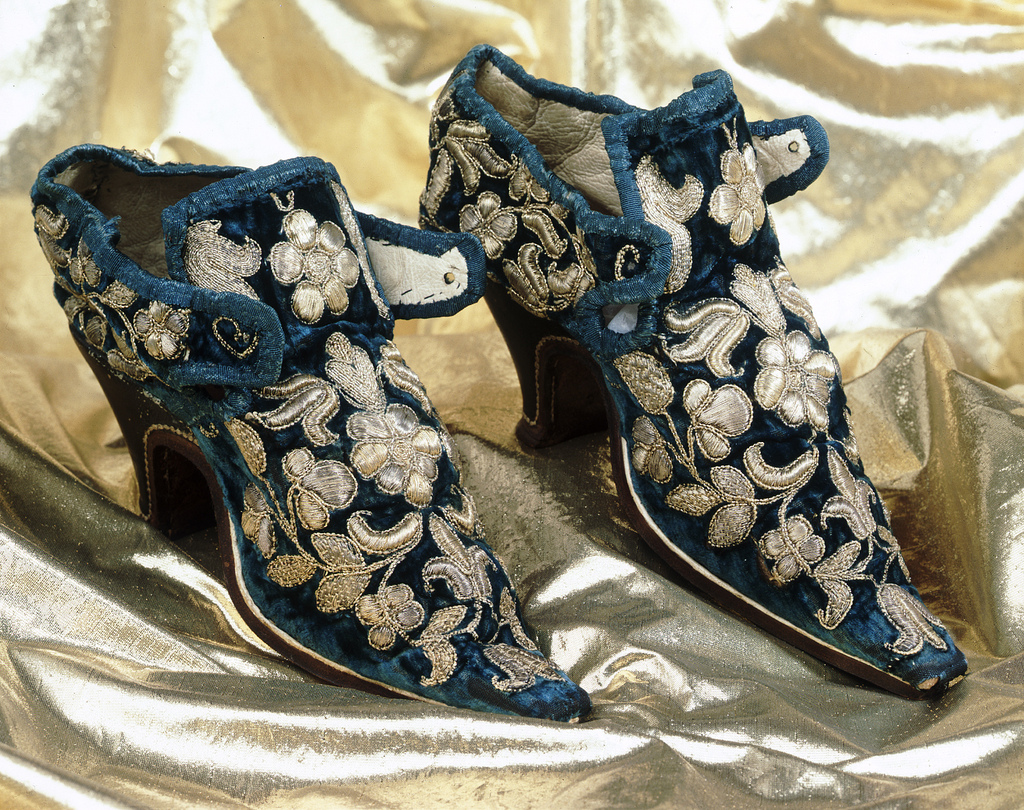
These I would NOT wish to wear,
not one little bit...
ever.
They must have been the height of fashion in their day, worn by Lady Mary Stanhope around 1660...
blue velvet, embroidered with silver gilt thread...once tied across the tongues
with decorative ribbons perhaps...
~ Shoe Collection, Northampton Museum & Art Gallery, UK ~


Back to the future...where a wall can be velvet...
~ Capital Museum in Beijing, photo (c) Trey Ratcliff ~


where we can travel in style if we want to...these seats look comfy don't they,
but...
~ Hankyu velvet, photo (c) Sam Bowman ~


...not nearly as inviting as these velvet seats.
~ Rocks, Moss & Water, photo (c) Martin Cathrae ~


Watchers.  They wear their velvet in summer...
~ Prairie Grass Bucks, photo (c) shadarington ~


and the groves, their velvet raincoats...
~ trees covered in velvet moss, photo (c) KWDesigns ~


...while here at home, repurposed velvet becomes a bit of architecture for my long cloth...
*****

What a gathering has happened over at Spirit Cloth!
'Contemporary Woven Boro'...a workshop who's meaning redefines itself each day...
over one hundred of us (imagine that)
*traveling companions* engaged in the common language of cloth:
 weaving, stitching, experimenting, learning from one another...
jumping off...out...even when there appears (at first) to be no familiar net to catch us.